
Furigana at your level
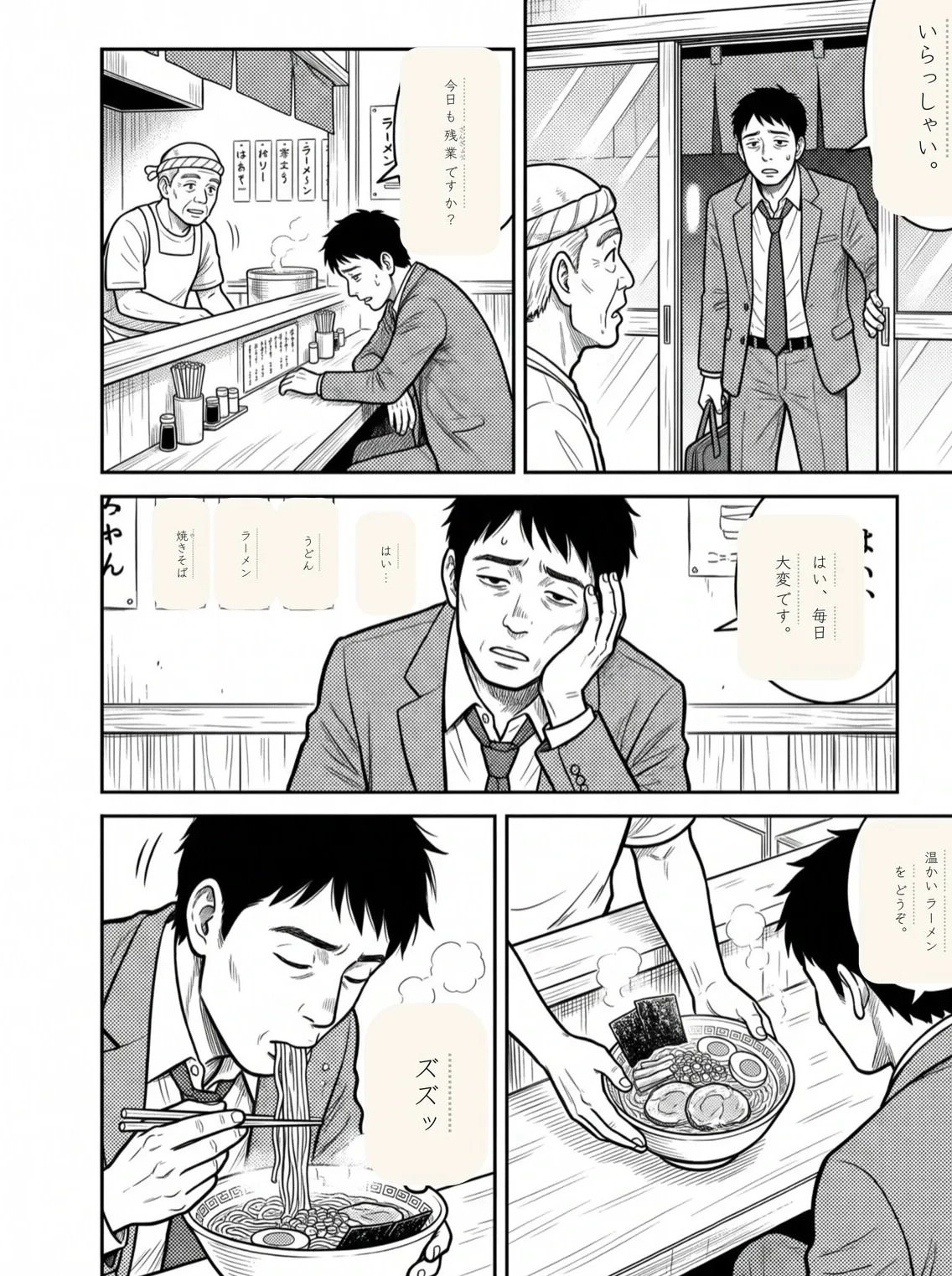
Readings appear over kanji words above the JLPT level you pick; words at or below it stay bare. Change the level at any time, free.
For JLPT N5 to N1 learners
Upload a manga page you own and it comes back still in Japanese: furigana over the kanji above your level, a card for every word you tap, and each bubble’s translation hidden until you ask for it.
Sample pages are our own AI-drawn pages. Manga-Translator.net hosts no manga and is not affiliated with any publisher.
Furigana level
Translations in
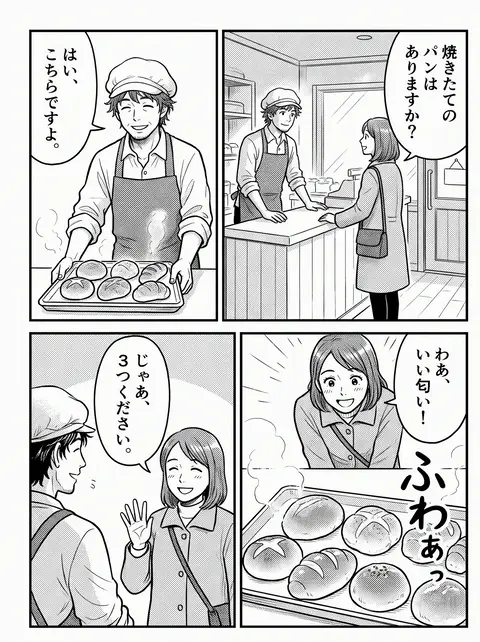
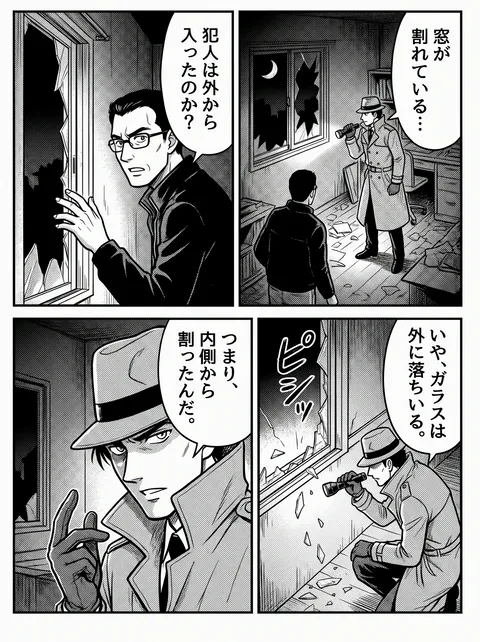
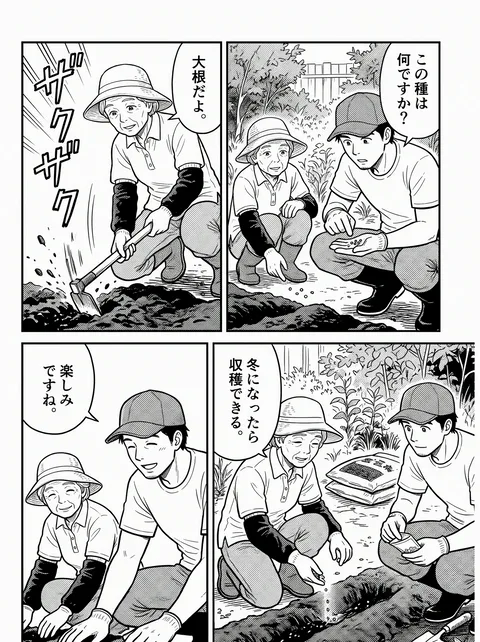
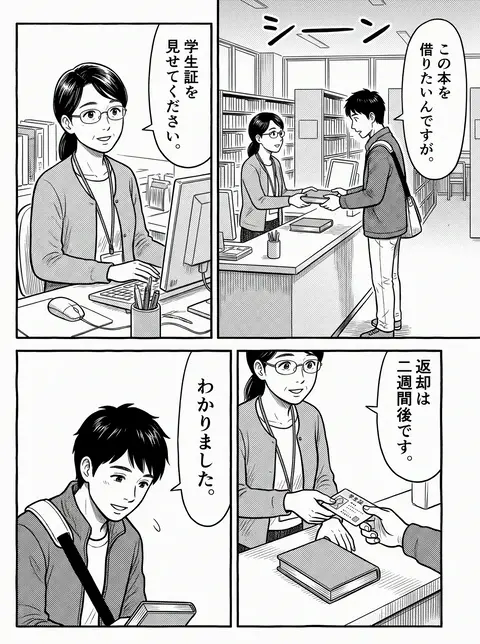
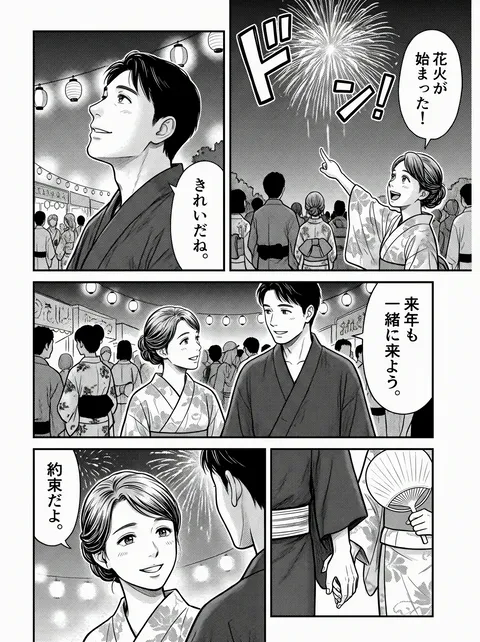
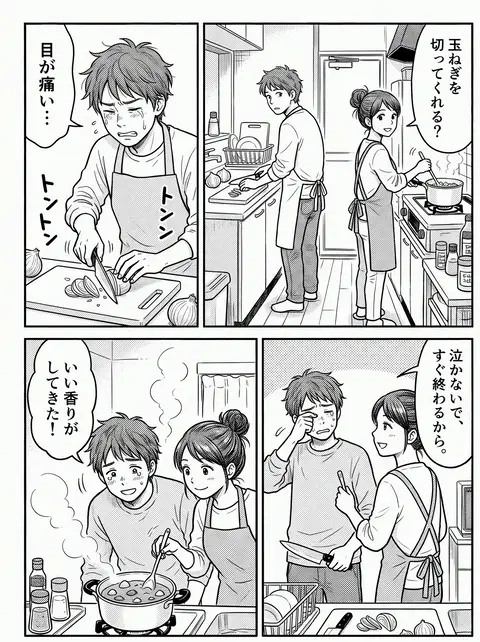
This is one of our own AI-drawn sample pages. Tap any word to see its card.
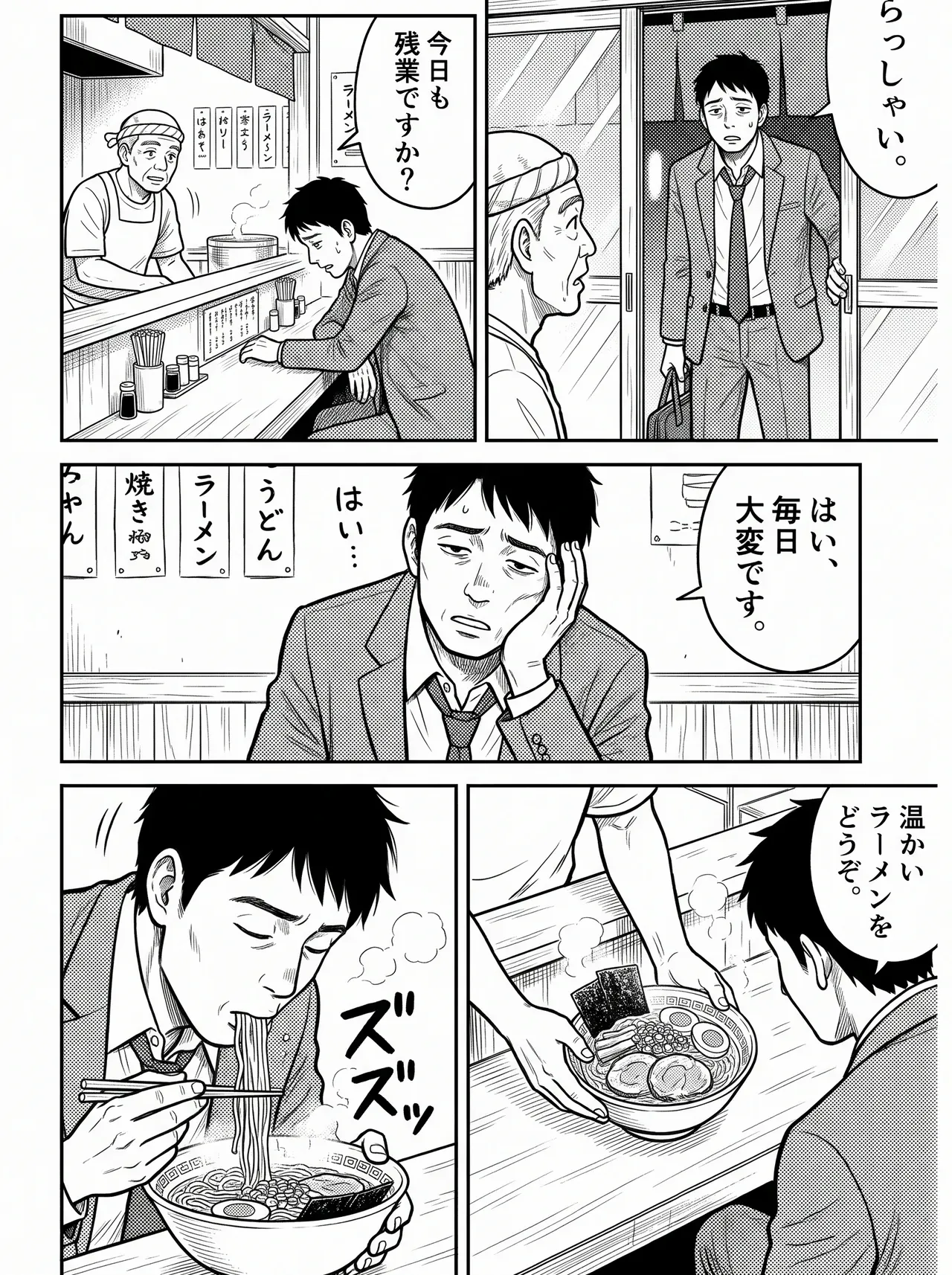
Tap a word on the page or in a bubble to see its card.
How it works
Three steps, and the page stays in Japanese the whole time.
A photo, a scan or a screenshot of an e-book you bought: JPG, PNG or WebP. Pages stay private to your account.
Choose N5 to N1, all furigana or none. Each bubble is read in manga order, right to left and top to bottom, vertical text included.
Read with furigana above your level, tap words for their cards, reveal a translation only when you need it, and save new words to your deck.
On every page
Nothing on the page is erased or re-lettered. The study tools sit on top of the Japanese, and you choose when to use them.
Readings appear over kanji words above the JLPT level you pick; words at or below it stay bare. Change the level at any time, free.
See its reading, dictionary form, meaning, part of speech and JLPT level. Readings the reader is unsure of are marked “check”.
Each bubble’s translation, in English, Chinese, Spanish, Portuguese, French, German or Korean, waits until you tap reveal, so you try the Japanese first.
Ask for a short note on the grammar in one bubble: conjugations, particles and the casual endings textbooks skip.
Hear the whole page in natural Japanese for shadowing. It is charged once per page, and replays are free.
Save words with the sentence they came from, then export a CSV that imports into Anki as is. Saving and exporting are free.
Sample pages
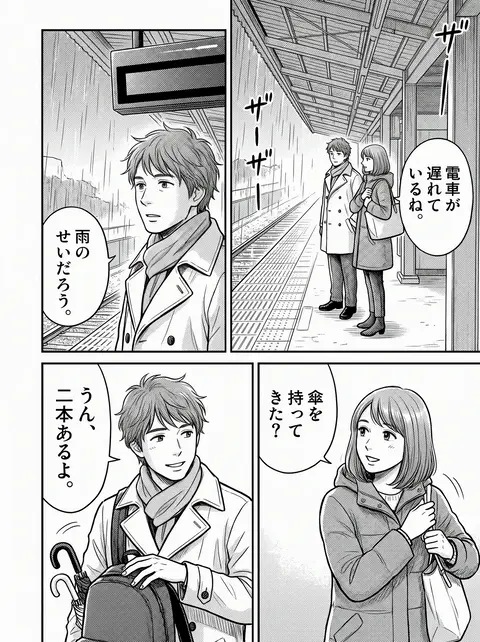
We drew these pages with AI for this site, so you can try the furigana, word cards and hidden translations before you upload anything.
Guide
The best way to practise Japanese reading with manga is short, regular sessions on pages a little above your level: read each bubble in Japanese first, look up only the words you cannot read, and keep the new ones for review.
Manga gives you what graded readers cannot: a story you want to finish, short lines, and pictures that carry half the meaning. A face, a gesture or a sound effect tells you whether a line is a question, a joke or a threat before you know every word, so you can guess, check and remember. The speech is natural too, with casual endings, contractions and sentence-final particles that textbooks leave until late. That is also the hard part: few manga for older readers print furigana, and stopping at every kanji kills the story.
Pick pages, not whole series. A good practice page has mostly dialogue, a few characters, and a scene you can follow from the pictures alone. Slice-of-life, school and comedy pages read more easily than fantasy or historical drama, which lean on invented terms and old-fashioned speech. Use a book you own: a print volume you can photograph, a scan of it, or a screenshot of an e-book you bought. If more than one word in three is new to you, try an earlier chapter or a gentler title; if almost nothing is new, move up.
Furigana are the small kana printed beside or above kanji to show how they are read. Manga for younger readers print them over every kanji; manga for older teens and adults usually print none, which is why learners look for furigana manga. Here, any page you upload becomes a furigana manga page: each bubble is read in manga reading order, right to left and top to bottom, vertical text included, and the readings are drawn over the kanji on the page itself.
Furigana on every word is a crutch, though. Your eyes jump to the kana and skip the kanji, so the characters never stick. The level filter fixes that: words at or below your JLPT level stay bare, and only the words above it get readings. You still see the kanji you are meant to know, and you get help only where a reading is honestly out of reach.
When you have no image, paste Japanese text instead: a passage from a graded reader, a song lyric or your own notes. You get the same level-filtered furigana as ruby text, tappable word cards, and a bracket version such as 漢字[かんじ] that you can paste straight into Anki fields.
Pick N5 to N1 to match the level you are studying now, not the exam you passed. At N5 almost every kanji word gets a reading; at N3 most everyday words are bare and readings appear on less common ones; at N1 only rare words, names and unusual readings are marked. All furigana shows every reading, which helps on a first pass through a hard page, and No furigana hides them all for a test read.
The filter is free to change once a page is broken down, so read the page at your level first and step down a level only if you are stuck. Words on no JLPT list, such as names, slang and rare words, always get readings and carry no level badge, so check their cards when they matter to the story. When you can read every line without help, move the filter up a level.
A short daily session works better than a long weekend one. Spend five minutes reading the page straight through at your level without tapping anything, following the story from the pictures. Then spend ten minutes on the bubbles: tap only the words you could not read, try each line yourself, and reveal its translation to check. Ask “Why this form?” on the one bubble whose grammar still puzzles you.
Use the last five minutes to save the words worth keeping, usually three to eight per page, and read the page once more, aloud if you can. Read-aloud plays the whole page in natural Japanese, which helps with shadowing and with hearing where casual speech drops sounds. The reading log shows pages read and words saved each week, so you can see whether the habit is holding.
Every word you save keeps its reading, meaning, part of speech, JLPT level and the sentence it came from, with that sentence’s translation. Reviewing a word inside its own line from the story is easier than reviewing a bare dictionary entry, because the scene comes back with it.
Export the deck as a CSV with the columns Word, Reading, Meaning, Sentence, Sentence meaning, Part of speech, JLPT tag and Source. In Anki, choose File, then Import, pick the file, map the columns to your note type’s fields once, and import. Saving and exporting are free, and you can export again whenever the deck grows. This site does not schedule reviews itself; Anki’s spaced repetition does that part. Anki is a separate project, and this site is not affiliated with it.
Readings are checked against a dictionary sample before launch, but they are not perfect. Names and rare or unusual readings are the most likely to be wrong, and words the reader is unsure of are flagged “check” on their card. Use the “report a wrong reading” link when you find one. Hand-lettered sound effects and very small print are the hardest text to read, so a sharp, straight photo helps.
The site hosts no manga: you bring pages of books you own or may use, and the samples here are our own AI-drawn pages. Your pages are private and are deleted automatically unless you keep them. There is no browser extension, no offline mode and no handwriting input. It is a reading-practice tool, not a full Japanese course, so pair it with a grammar book or a class for the basics.
Credits
You pay to have a page read, for the voice and for grammar notes. Everything you do on a page after that is free.
| Step | What you get | Credits |
|---|---|---|
| One page broken down | Reading order, furigana, a card for every word and hidden translations | 30 |
| Read aloud | The whole page in natural Japanese; charged once, replays free | 42 |
| Grammar note | A short note on the forms in one bubble | 2 |
| Pasted text | Up to 2,000 characters: furigana and word cards | 8 |
| Everything else | Changing the level, word cards, revealing translations, saving words and exporting the deck | Free |
Pricing
Three personal plans, two team plans billed per seat, and a one-time pack. New accounts get 30 free credits once: one page broken down at 30 credits.
Cancel anytime · Refund window of 14 days
3,165 credits a month, about 105 pages broken down
$13.09/month
Billed monthly, cancel anytime
3,165credits a month
Billed per seat, from 3 seats. Every seat adds credits to one shared pool, and members join by invite link.
2,885 credits a month per seat, in one shared pool
$11.59per seat a month
Billed monthly, cancel anytime3 seats: $34.77 in total
2,885credits a month per seat
3,165 credits a month, about 105 pages broken down
$13.09$10.91/month
$130.90 billed once a year · or $13.09 billed monthly
3,165credits a month
Billed per seat, from 3 seats. Every seat adds credits to one shared pool, and members join by invite link.
2,885 credits a month per seat, in one shared pool
$11.59$9.66per seat a month
$115.90 per seat a year · or $11.59 per seat billed monthly3 seats: $347.70 in total
2,885credits a month per seat
Credits for a whole volume or two, no subscription
6,417credits
$30.99one-time
Credits never expire and work with every study tool.
Kana Start
Furigana filtered by your JLPT level · Word cards, translations and grammar notes · Japanese read-aloud for every page · Vocabulary deck with an Anki-ready CSV · Furigana for pasted text
Kanji Climb
Furigana filtered by your JLPT level · Word cards, translations and grammar notes · Japanese read-aloud for every page · Vocabulary deck with an Anki-ready CSV · Furigana for pasted text
Native Pace
Furigana filtered by your JLPT level · Word cards, translations and grammar notes · Japanese read-aloud for every page · Vocabulary deck with an Anki-ready CSV · Furigana for pasted text
Free: 30 credits once, added when you confirm your email, no card needed. That is one manga page broken down, with its words saved and exportable. One grant per mailbox. They never expire.
Refunds within 5 days (monthly), 14 days (yearly) or 10 days (credit packs) if no more than 10% of the credits were used; the unused part comes back pro rata.
Yes. Upload any page and furigana are drawn over the kanji words above the JLPT level you pick, on the page itself, in manga reading order and in vertical text too. Words at or below your level stay bare so you keep practising them.
Yes. Paste up to 2,000 characters of Japanese and get the same level-filtered furigana as ruby text, tappable word cards and a bracket version such as 漢字[かんじ] to copy. One pasted text costs 8 credits.
Yes. Export your vocabulary deck as a CSV and import it into Anki as is, with columns for the word, reading, meaning, sentence, sentence meaning, part of speech, JLPT tag and source. Saving words and exporting are free. Anki schedules the reviews; this site has no review scheduler of its own.
Short, dialogue-heavy pages about everyday life: school, family, food and comedy. Avoid fantasy and historical series at first, since they use invented terms and old-fashioned speech. At N5 or N4 set the filter to your level and expect most kanji words to carry readings; that is normal.
No. You upload pages of books you own or may use, such as a photo of a print volume or a screenshot of an e-book you bought, and confirm it for each page. The sample pages on the site are our own AI-drawn pages.
Most readings are right, but not all. Before launch they were checked against a dictionary sample. Names and rare or unusual readings are the most likely to be wrong; words the reader is unsure of are marked “check”, and every card has a “report a wrong reading” link.
Only you. There is no sharing and no public gallery. Every page passes an automated content check before it is read, and adult content is refused. Pages are deleted after 30 days unless you press Keep; kept pages stay until you delete them.
Your credits come back. Credits are taken when a page, a read-aloud or a grammar note starts; if the job fails or times out, they return to your balance automatically and the page shows the reason.
Yes. New accounts get 30 credits once, after confirming their email: enough for one page fully broken down at 30 credits, with its words saved and exportable. You can also try every tool on our sample pages without an account. There are no daily or monthly free credits.
No. Manga-Translator.net is an independent reading-practice service. It is not affiliated with, endorsed by or sponsored by Anki or any manga publisher. Anki and the names of manga publishers are trademarks of their respective owners.
Updated
Upload it, pick your level, and read it bubble by bubble.